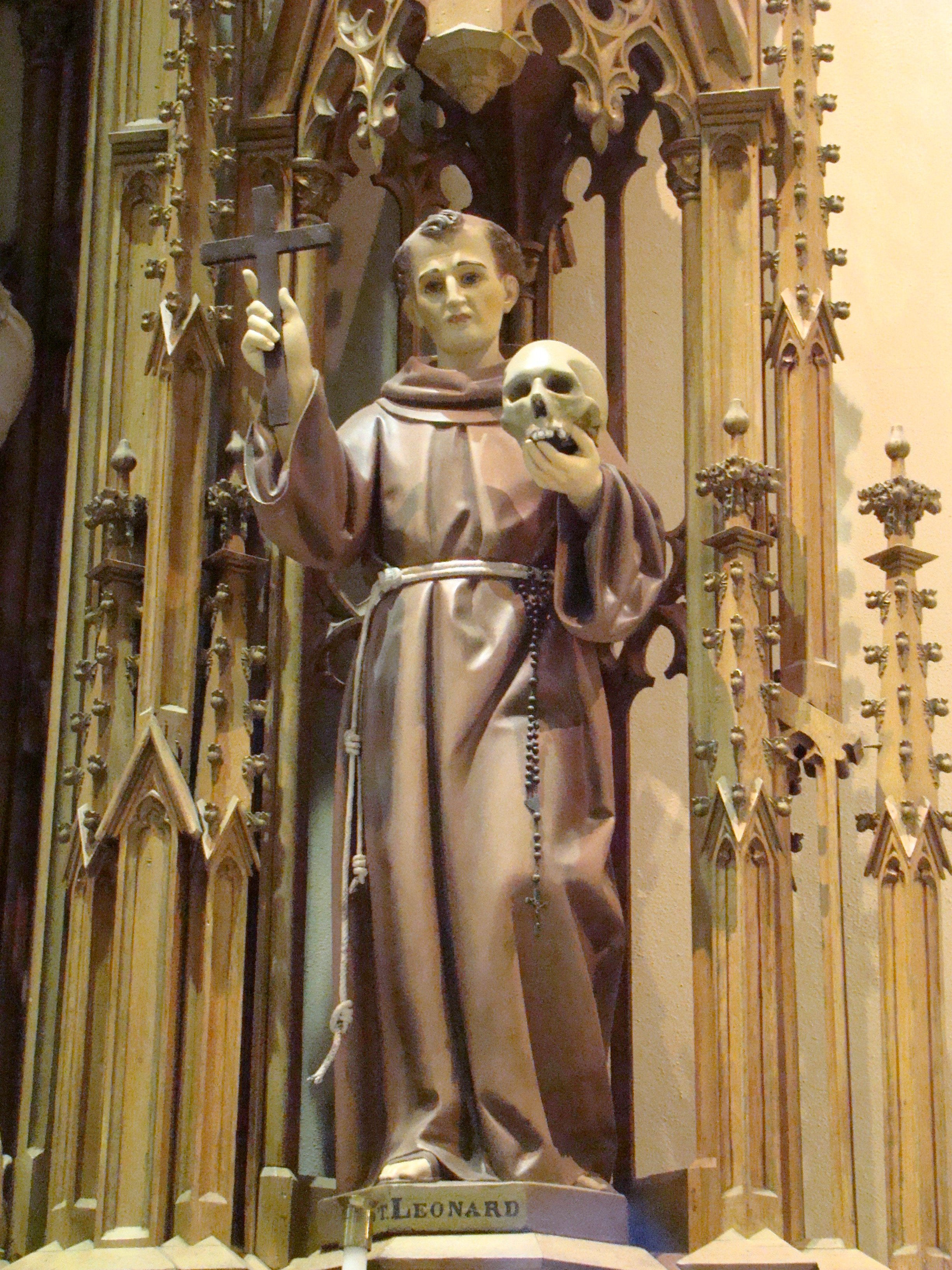
Our Patron: St. Leonard of Port Maurice
Saint Leonard of Port Maurice was one of the greatest Franciscan missionaries in the history of the Church. Born Paolo Girolamo Casanova in Porto Maurizio (now part of Imperia, Italy) on December 20, 1676, he entered the Franciscan Order, taking the name Leonard, and devoted his life to preaching missions, encouraging conversion, and rekindling faith throughout Italy.
He is especially remembered for:
The Stations of the Cross. He was instrumental in spreading this devotion throughout the Catholic world. He personally erected more than 570 Stations of the Cross, including the famous Stations in the Colosseum, where they remain a cherished tradition, especially on Good Friday.
Powerful preaching. He preached parish missions across Italy that drew thousands of people. Churches often could not contain the crowds, so he preached outdoors.
Devotion to the Eucharist, the Sacred Heart, and the Immaculate Conception. He tirelessly promoted frequent reception of the sacraments and a deeper love of Christ.
St. Leonard believed that authentic Christianity required:
Regular confession.
Daily prayer.
Love of the Eucharist.
Meditation on Christ's Passion.
Concrete conversion of life, not merely outward religious practice.
His sermons were passionate because he wanted people to encounter God's mercy through repentance.
Many Catholics know him because of his sermon The Little Number of Those Who Are Saved. It is one of his most famous and most debated sermons.
It is important to understand that:
This sermon is not Church doctrine.
It reflects his style as an eighteenth century missionary preaching to awaken complacent Christians.
The Church has never taught his numerical examples as factual statistics about salvation.
His purpose was to inspire repentance, not despair.
Canonization
Beatified: 1796 by Pope Pius VI
Canonized: 1867 by Pope Pius IX
Feast Day: November 26 (November 27 in the Franciscan calendar in some places).
"Prayer is the powerful weapon by which to conquer the devil."
Although remembered for fiery preaching, his life ultimately pointed people toward the hope found in Christ's mercy. His constant message was that no one is beyond God's grace if they sincerely turn back to Him through repentance, the sacraments, and a life of faith.